6.2 Role of IPE(s)
6.2.1 Fit with the Functional Architecture
oneM2M is using an Interworking Proxy Entity (IPE) to handle the interworking between the oneM2M system and external non-oneM2M Proximal IoT functions residing on Non-oneM2M Device Nodes (NoDNs). The functional relationship between a NoDN and the CSE that is supposed to host the interworking functionality is defined in the following, see also Annex F of oneM2M TS-0001 [2].
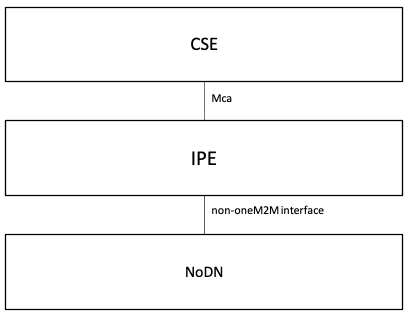
Figure 6.2.1-1: Interworking through IPE
An Interworking Proxy Entity is an AE that supports both, the oneM2M Mca reference point as well as the nononeM2M interface that the functions on one or more connected NoDN(s) require. The IPE is responsible for synchronizing the services provided by the non-oneM2M Proximal IoT functions on the NoDN with oneM2M resource instances and vice versa. The IPE can be deployed together with the CSE or NoDN, or the IPE can also be deployed separately. Deployed together means running in the same execution environment or running on the same operating system where in such case, the communication between the deployed entities doesn't involve remote communication through wired or wireless network. In this kind of deployment, the communication method for supporting communication between the functional entities depicted in Figure 6.2.1-1 shall be provided by the execution environment or the operating system, e.g. inter-process communications, function calls, service call-backs or message bus technologies.
The IPE is registered to the CSE that is meant to host the interworking functionality and it translates the functions or services provided or consumed by one or more NoDN(s) to or from content of resource instances that are hosted by CSEs in the oneM2M system. When such resource instances represent functions or services provided by NoDN(s) connected to a specific IPE, the Registrar CSE of that IPE shall host those resource instances. The IPE shall translate any occurrence of operations on the oneM2M resource instances into invocation of the corresponding non-oneM2M Proximal IoT functions provided by the connected NoDN(s) and vice versa when non-oneM2M Proximal IoT functions executed on any connected NoDN(s) need to be reflected by change(s) of content in the corresponding representation(s) in oneM2M resource instances.
Note
More than one IPE may be instantiated in order to support interworking with an external non-oneM2M Proximal IoT technology. Also, an IPE may instantiate one or more supporting AEs that are used to simplify correlation with AE aspects such as service subscription profiles, access control privileges, authentication, authorization, etc.
6.2.2 Exposure of Proximal IoT functions to the oneM2M System
The role of an IPE, when it comes to exposure of external non-oneM2M Proximal IoT functions to the oneM2M System, includes the creation, monitoring, modification (update/delete) of resource instances that are supposed to represent those external functions on its own Registrar CSE. This role also includes the following:
- The IPE needs to determine which non-oneM2M Proximal IoT functions need to be exposed (e.g. through provisioning, discovery, on-demand signalling, etc.) and detect dynamic changes of the set of the nononeM2M Proximal IoT functions to be exposed. On-demand discovery or change of exposure configurations may be triggered by other AEs/CSEs by modifying corresponding resource instances created by the IPE. A request to trigger discovery or to demand a change of the exposure configuration can be accomplished, for instance, via creation and monitoring of a <container> resource instance by the IPE, under which authorized AEs can create <contentInstance> resource instances, that indicate which action to take. Details of such a triggering mechanism are implementation dependent and will not be further specified in the present document.
- The IPE needs to handle creation/deletion of resource instances representing non-oneM2M Proximal IoT functions according to the - possibly dynamically changing - need to expose them to the oneM2M system using resource types that are independent of the external Proximal IoT technology.
- The IPE is responsible to modify the resource instances representing the non-oneM2M Proximal IoT functions according to any state changes occurring in the external Proximal IoT system.
- The IPE is responsible for monitoring relevant changes in the resource instances representing the non-oneM2M Proximal IoT functions and invocation of appropriate non-oneM2M Proximal IoT function(s) when any operation(s) meant to trigger the execution of that non-oneM2M Proximal IoT function(s) occur for those resource instances in the hosting CSE. This monitoring can be achieved for instance by creating under each such resource a <subscription> resource with eventNotificationType attribute set to "Blocking_Update".
The set of responsibilities of the IPE when exposing non-oneM2M Proximal IoT functions to the oneM2M system is summarized in Figure 6.2.2-1. The dashed boxes describe optional/alternative means to determine the set of exposed functions. Note that, in this Figure one IPE is responsible for all interworking actions. More than one IPE may be used to interwork with one particular Proximal IoT network. Also additional AEs may get instantiated by an IPE to support interworking, see clause 6.1. Details on the resource mapping are contained in clause 7.
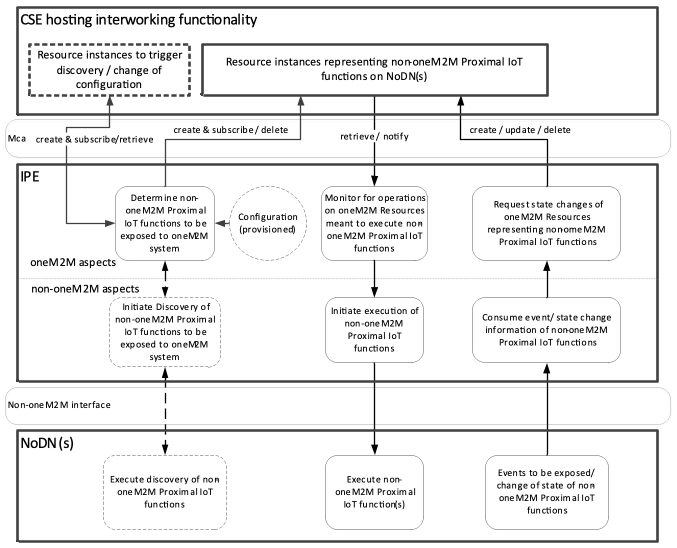
Figure 6.2.2-1: Exposure of Proximal IoT functions to the oneM2M System
6.2.3 Exposure of native oneM2M functions to the Proximal IoT System
The role of an IPE, when it comes to exposure of native oneM2M functions (aspects of devices, applications, services) to an external non-oneM2M Proximal IoT network, includes the monitoring, modification (update/delete) of resource instances that are representing oneM2M-internal functions to be exposed to an external non-oneM2M Proximal IoT network. This role also includes the following:
- The IPE needs to determine which native oneM2M functions need to be exposed to the external non-oneM2M Proximal IoT network (e.g. through provisioning, resource instance discovery, on-demand signalling, etc.) and detect dynamic changes of the set of native oneM2M functions to be exposed. On-demand discovery or change of exposure configurations may be triggered by other AEs/CSEs by modifying corresponding resource instances created by the IPE. A request to trigger discovery or to demand a change of the exposure configuration can be accomplished, for instance, via creation and monitoring of a <container> resource instance by the IPE, under which authorized AEs can create <contentInstance> resource instances, that indicate which action to take. Details of such a triggering mechanism are implementation depended and will not be further specified in the present document.
- The IPE needs to handle creation/deletion of functions in the non-oneM2M Proximal IoT network representing native oneM2M functions according to the - possibly dynamically changing - need to expose them to the non-oneM2M Proximal IoT network.
- The IPE is responsible to modify the resource instances representing exposed native oneM2M functions according to any events occurring in the external non-oneM2M Proximal IoT network that require state changes of the resource instances representing the exposed native oneM2M functions.
- The IPE is responsible for monitoring relevant changes in the resource instances representing exposed native oneM2M functions and invocation of the corresponding non-oneM2M Proximal IoT function(s) provided by the IPE when any operation(s) occur for those resource instances that require an indication of the changed state in the provided external functions.
The set of responsibilities when exposing native oneM2M functions to the external non-oneM2M Proximal IoT network is summarized in Figure 6.2.3-1. The dashed boxes or lines describe optional/alternative means to determine the set of exposed functions. Note that, in this Figure one IPE is responsible for all interworking actions. More than one IPE may be used to interwork with one particular Proximal IoT network. Also additional AEs may get instantiated by an IPE to support interworking, see clause 6.1. Details on the resource mapping are contained in clause 7.
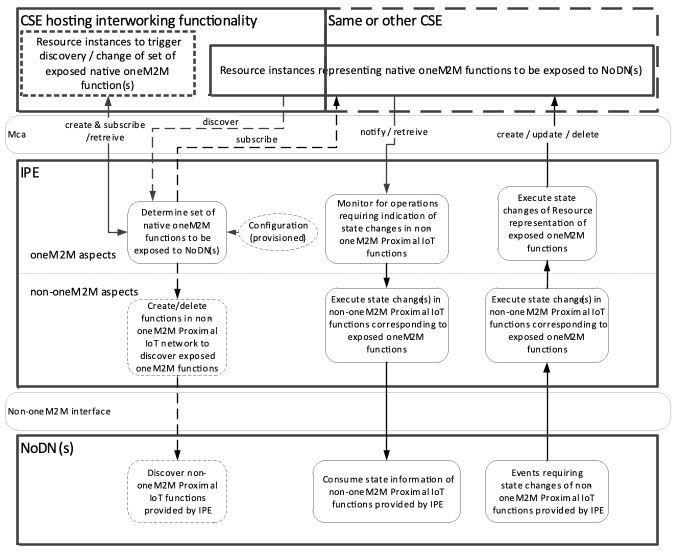
Figure 6.2.3-1: Exposure of native oneM2M functions to the Proximal IoT System