7.12 Network Parameter Configuration
The 3GPP SCEF functionality described in 3GPP TS 29.122 [4]. supports an API for Network Parameter Configuration which may be used by the IN-CSE to suggest to the 3GPP Mobile Network specific configuration parameters. The procedure may be used by the IN-CSE to influence certain aspects of UE/network behaviour such as the UE's PSM and extended idle mode DRX. For this purpose, parameter values may be suggested for Maximum Latency and Maximum Response Time for a UE. The Mobile Core Network may choose to accept, reject or modify (via the SCEF) the suggested configuration parameter value.
Note
Once the network provides the SCEF with the configured values, the MME could later change the values. For example, the UE can be roaming and the visited network might not allow certain values. In this scenario, the SCEF can request a reachability notification with the Idle Status Indication set to indicate that it wants to be notified of the UE's active timer and periodic TAU/RAU timer when the UE enters the idle state.
In the 3GPP interworking architecture of oneM2M, the UE can host an ADN-AE or an ASN/MN-CSE. The Network Parameter Configuration flow in Figure 7.12-1 takes place after the UE has attached to the underlying 3GPP Network and the ADN-AE or ASN/MN-CSE is registered with the IN-CSE.
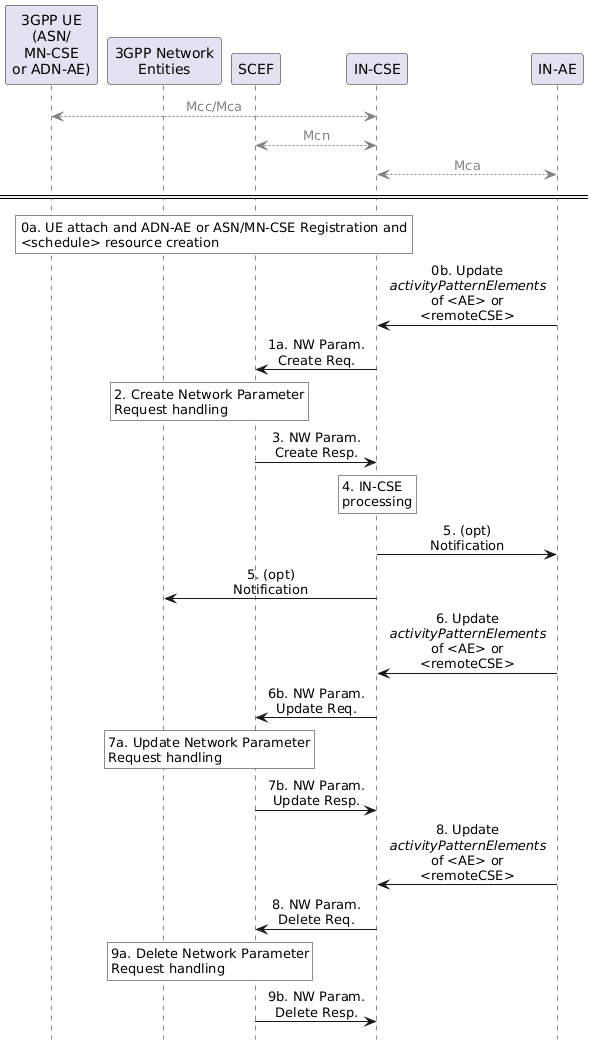
Figure 7.12-1: Network Parameter Configuration flow
Step 0: UE Attach and oneM2M Registration Procedures
The UE attaches to the underlying 3GPP network and the ADN-AE(s) or ASN/MN-CSE hosted on the UE perform the oneM2M registration procedure, as detailed in clause 6.3. The IN-CSE hosts the corresponding <AE> or <remoteCSE> resources and an associated <node> resource for the registree. During this procedure, a <schedule> resource is created as child of the <node> resource. The UE hosted ADN-AE(s) or ASN/MN may subscribe to the node <schedule> resource. If an IN-AE is interested in the reachability status of the UE, it may also subscribe to the <schedule> resource.
An ADN-AE, ASN/MN-CSE or IN-AE may configure the activityPatternElements attribute of a <AE> or <remoteCSE> resource with one or more anticipated windows of availability for the corresponding ADN-AE, ASN/MN-CSE. The information contained within the activityPatternElements attribute(s) of all ADN-AE(s) and ASN/MN-CSE hosted on the same UE are used by the IN-CSE to configure a network parameter configuration request that is sent to the SCEF.
Step 1: IN-CSE sends to the SCEF a Network Parameter Configuration request
This step is triggered by the creation of one or more <AE> or <remoteCSE> resources with the activityPatternElements attribute set (step 0a) or the modification of one or more of the activityPatternElements attributes during an update of the <AE> or <remoteCSE> resources (step 0b).
The IN-CSE determines the SCEF based on the M2M-Ext-ID 's of the registree ASN/MN-CSE or ADN-AEs (e.g. either a DNS lookup on the M2M-Ext-ID or the based on the domain portion of the M2M-Ext-ID's.). The IN-CSE provides the network pattern to the SCEF, the fields of the API are populated as follows.
- An HTTP POST method shall be used
- URI shall be set to {apiRoot}/3gpp-network-parameter-configuration/v1/{scsAsId}/configurations/. The {apiRoot} and {scsAsId} segments are configured based on Service Provider and MNO policies.
- The request payload shall include a NpConfiguration data structure as specified in 3GPP TS 29.122 [4] with the following attributes:
- externalId shall be set to M2M-Ext-ID
- supportedFeatures - shall be set to a string value of "0" indicating no support for notifications over Websockets or notification test events.
- maximumLatency - This value tells the network how long the UE is allowed to sleep. Setting it to 0 will disable PSM, extended idle mode DRX, and S-GW buffering. The IN-CSE shall extract the the active periodicity defined in the scheduleElement(s) of all the applicable activityPatternElements attributes of the <AE> resource(s) of the ADN-AE(s) and <remoteCSE> resource of the ASN/MN-CSE hosted by the UE, if configured. The_IN-CSE_ shall set Maximum Latency to be approximately the periodicity of the active periods defined in the scheduleElement(s) of all the applicable activityPatternElements attributes of the <AE> resource(s) of the ADN-AE(s) and <remoteCSE> resource of the ASN/MN-CSE hosted by the UE, if configured. If there is no periodicity it is recommended not to utilize this parameter.
- maximumResponseTime - When the UE uses PSM, Maximum Response Time tells the network how long the UE should stay reachable after a TAU. When the UE uses eDRX, Maximum Response Time is used by the network to determine when to send a reachability notification before a UE's paging occasion. The IN-CSE extracts a duration of activity from the scheduleElement of all the applicable activityPatternElements attributes of the <AE> resource(s) of the ADN-AE(s) and <remoteCSE> resource of the ASN/MN-CSE hosted by the UE, if configured. The IN-CSE shall set Maximum Response Time to reflect this duration of activity, indicating how long the UE should stay reachable for downlink communications.
- notificationDestination shall be set to a URI that the SCEF can target Network Parameter notifications towards. The value of this URI shall be based on internal IN-CSE policies.
- msisdn, externalGroupId, requestTestNotification, groupReportingGuardTime, websockNotifConfig and suggestedNumberOfDlPackets are not supported by the present document and shall not be included.
General exceptions and error handling:
- If the SCEF is not reachable when the IN-CSE tries to send Network Parameter Configuration request then the IN-CSE may attempt to retry Network Parameter Configuration requests some time in the future in case the the SCEF does become reachable. The conditions for when the IN-CSE should retry a Network Parameter Configuration request are not defined in the present document.
Step 2 and 3: Network Parameter Configuration Handling in the underlying 3GPP network
The SCEF processes the request and sends a response to the IN-CSE to acknowledge the request has been accepted. This message is defined in 3GPP TS 29.122 [4] and includes the following information.
- A response code of 201 CREATED
- The URI of the Network Parameter Configuration resource created by the SCEF. The URI is returned in the HTTP Location header with a format of {apiRoot}/3gpp-network-parameter-configuration/v1/{scsAsId}/configurations/{configurationId}. The {apiRoot} and {scsAsId} segments are configured based on Service Provider and MNO policies. The {configurationId} segment is configured by the SCEF.
- The response payload will include a NpConfiguration data structure as specified in 3GPP TS 29.122 [4] that includes the attributes present in the request along with the following additional attributes. The response may include updated values of maximumLatency and maximumResponseTime if the network chose to use values that were different than the values that were suggested by the IN-CSE:
- self is configured with a URI to the Network Parameter Configuration resource created by the SCEF for the request
- If the SCEF does not respond to the IN-CSE or responds with an error response code, the IN-CSE shall assume that the Network Parameter Configuration resource has not been created by the SCEF. Any further creates or updates of activityPatternElements attributes for ADN-AE(s) or ASN/MN-CSE hosted on this same UE shall result in a Network Parameter Configuration POST request by the IN-CSE until the SCEF responds with a successful response (201 CREATED).
See clause 8.3 for a list of possible error scenarios and error handling options for the IN-CSE.
Step 4: Network Parameter Configuration Handling at the IN-CSE
The IN-CSE processes information received in the response which may include updated values of maximumLatency and maximumResponseTime if the network chose to use values that were different than the values that were suggested by the IN-CSE.
Note that IN-CSE shall not update the activityPatternElements attribute based on the response received from SCEF. Any further updates to the UE reachability shall be reflected in the <schedule> resource.
Step 5: (Optional) If IN-AEs have subscribed to changes in the <schedule> resources, a notification will be sent to the subscribers when UE changes it reachability status such as transitioning to connected mode or idle mode. Notifications will also be sent to the UE hosted ADN-AE or ASN-CSE/MN-CSE, if subscriptions to their respective <schedule> resources have been created.
Step 6: IN-CSE sends to the SCEF a Network Parameter Configuration update request
Once a Network Parameter Configuration resource has been created by the SCEF for a given UE, the IN-CSE shall keep it updated if any activityPatternElements of the ADN-AE(s) or ASN/MN-CSE hosted on the UE are modified or deleted. To perform the update, the IN-CSE shall generate a Network Parameter Configuartion update request that contains the following information as specified in 3GPP TS 29.122 [5].
- An HTTP PATCH method shall be used
- URI shall be set to {apiRoot}/3gpp-network-parameter-configuration/v1/{scsAsId}/configurations/{configurationId}. The {apiRoot} and {scsAsId} segments are configured based on Service Provider and MNO policies. The {configurationId} segment is configured by the SCEF and provided to the IN-CSE in the Network Parameter Configuration create response.
- The request payload may include the following parameters:
- maximumResponseTime, maximumLatency and suggestedNumberOfDlPackets
- groupReportGuardTime is not supported currently and is out of the scope of this document
Step 7: SCEF processes the Network Parameter Configuration update request and sends response
SCEF checks whether the maximum latency, maximum response time and suggested number of downlink packets are within the range defined by the MNO policies. SCEF processes the request and sends a response to the IN-CSE to acknowledge that the request has been accepted. The message structure is defined in 3GPP TS 29.122 [5]. The SCEF:
- Either rejects the request message by sending HTTP response code 403 FORBIDDEN and indicates which parameters are out of range in the problemDetails attribute
- Or accepts the suggested network parameters by sending HTTP response code "200 OK".
The IN-CSE shall not update the activityPatternElements attribute based on the response received from the SCEF.
Step 8: IN-CSE sends Network Parameter Configuration Delete request to SCEF
If/when all the activityPatternElements for the ADN-AE(s) or ASN/MN-CSE hosted on a given UE are deleted, the IN-CSE shall send a Network Parameter Configuration DELETE request that contains the following information as specified in 3GPP TS 29.122 [5].
- An HTTP DELETE method shall be used
- URI shall be set to {apiRoot}/3gpp-network-parameter-configuration/v1/{scsAsId}/configurations/_/{configurationId}. The {apiRoot} and {scsAsId} segments are configured based on Service Provider and MNO policies. The {configurationId} segment is configured by the SCEF and provided to the IN-CSE in the Network Parameter Configuration create response.
Note, once the Network Parameter Configuration resource for a given UE has been deleted, the IN-CSE shall create a new Network Parameter Configuration create request, using the same procedure described above, if/when an activityPatternElements for an ADN-AE or ASN/MN-CSE hosted on the UE is configured.
Step 9: SCEF processes Network Parameter Delete request and sends a response to IN-CSE
The SCEF processes the Network Parameter Delete Request and returns a 204 NO CONTENT response to the IN-CSE.