8.4 Parameter checking for Monitoring Events
8.4.1 General Concepts
A monitoring events provides functions that monitors for the following notifcations:
- LOSS_OF_CONNECTIVITY
- UE_REACHABILITY
- LOCATION_REPORTING
- CHANGE_OF_IMSI_IMEI_ASSOCIATION
- ROAMING_STATUS
- COMMUNICATION_FAILURE
- AVAILABILITY_AFTER_DDN_FAILURE
The procedures for each monitoring event are similar to use API which is MonitoringEventSubscription and MonitoringNotification. The basic procedures are:
- An IN-CSE, as a 3GPP SCS, sends a MonitoringEventSubscription requests to a SCEF.
- The SCEF responds to the MonitoringEventSubscription request.
- The 3GPP core network detects monitoring events and reports the detected information to the SCEF.
- The SCEF sends MonitoringNotification reports to IN-CSE.
- The received MonitoringNotification depends on monitoringType.
8.4.2 General Parameter checking for Monitoring Events
When IN-CSE receives a MonitoringNotification report, the IN-CSE shall verify the request using the following procedures.
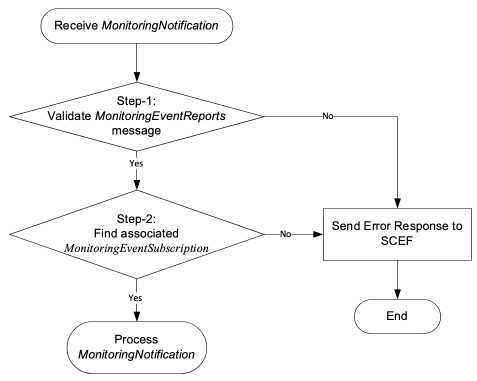
Figure 8.4.2-1: General procedure for parameter checking on monitoring event
When IN-CSE receives a MonitoringNotification from SCEF, the IN-CSE may check the parameters for validation.
Step-1: The IN-CSE validates received attributes of MonitoringEventReports based on MonitoringType. If the received message is not valid then the IN-CSE responds with the 400 Bad Request.
The mandatory attributes for Monitoring Type are:
- lossOfConnectReason for LOSS_OF_CONNECTIVITY
- idleStatusInfo, eachabilityType for UE_REACHABILITY
- locationInfo for LOCATION_REPORTING
- imeiChange for CHANGE_OF_IMSI_IMEI_ASSOCIATION
- roamingStatus for ROAMING_STATUS
- failureCause for COMMUNICATION_FAILURE
- idleStatusInfo for AVAILABILITY_AFTER_DDN_FAILURE
Step-2: Find the MonitoringEventSubscription that the received MonitoringNotification refers to based on the subscription, monitoringType and the externalIDs attributes. If a matching MonitoringEventSubscription is not found, then the IN-CSE responds with the 400 Bad Request.