7.13 Node Schedule Management
The <schedule> resource in oneM2M contains scheduling information. The usage of the <schedule> resource is different depending on the associated resource type, as follows:
- A child <schedule> resource of the <node> resource shall indicate the time periods when the node can communicate via the underlying 3GPP network. If multiple underlying 3GPP networks are supported, for each there can be a maximum of one <schedule> resource. One <schedule> resource may be used for multiple underlying 3GPP networks.
The mgmtLink attribute of the <cmdhNwAccessRule> child resource of a <node> resource shall link to a <schedule> resource that is also a child of the same <node> resource.
In the context of 3GPP connectivity technologies, per 3GPP TS 23.682 [2], the network reachability and UE reachability are both indications that the UE becomes reachable for receiving either an SMS or downlink data. The SCEF supports the capability to notify the IN-CSE of the network reachable status or the UE reachable status. The IN-CSE shall maintain a <schedule> resource of a UE and if the networkCoordinated attribute of the <schedule> is set to TRUE, then the IN-CSE shall coordinate the schedule based on the UE's reachability. For example, the IN-CSE shall support synchronizing the start time of the scheduleElement attribute to be the same as the start time of the targeted UE idle status which the IN-CSE receives from the underlying 3GPP network.
Refer to the clause 9.6.9 Resource Type <schedule> of oneM2M TS-0001 [1]
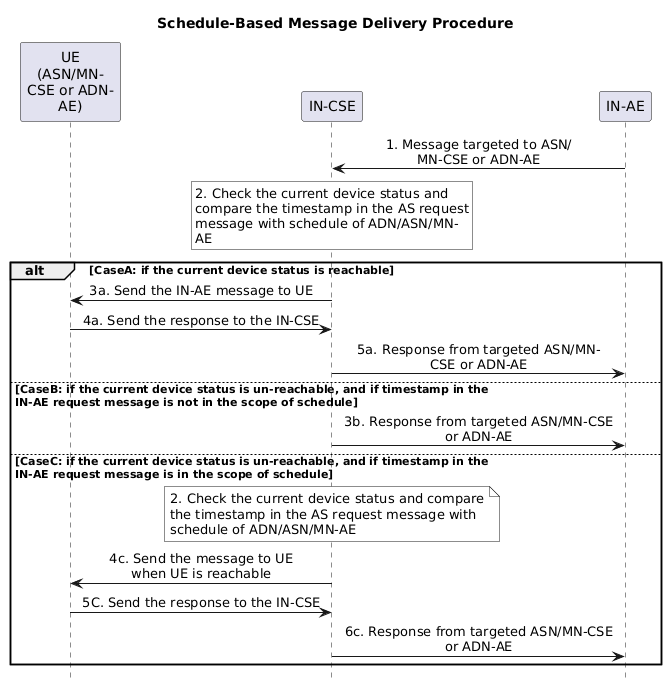
Figure 7.13-1: Targeting UE based on the <schedule> of <node> resource
Pre-requisites:
- The M2M-Ext-ID attribute of <remoteCSE> or <AE> resource of the targeted UE is pre-configured.
- For the targeted UE, the <schedule> resource is a child resource of a <node> resource, and the networkCoordinated attribute of <schedule> is 'True'.
Step 1: The IN-AE sends message to the IN-CSE that targets an ASN/MN-CSE or ADN-AE hosted on a UE. When the message is a request, it shall include the targeted resource identity.
Step 2: IN-CSE checks the local <schedule> of the targeted ASN/MN-CSE or ADN-AE node which indicates the pre-defined reachability schedule information of the targeted node according to the target resource indentity. The IN-CSE also checks if the networkCoordinated attribute of the <schedule> resource is TRUE, to determine whether the schedule is coordinated with the UE's underlying 3GPP network schedule. Based on this information, the IN-CSE determines whether the UE is available to receive a request or response message at the current time.
Case A: if the current time is within the period of <schedule>, then this indicates the target ASN/MN-CSE's or ADN-AE's current status is reachable and the following steps are applicable:
- Step 3a: IN-CSE sends the message to ASN/MN-CSE or ADN-AE directly after CMDH message processing is successful as specified in Annex H in oneM2M TS-0004 [3]; and then continues with the step 4a). Otherwise continues with the step 5a) as specified as in Annex H in oneM2M TS-0004 [3].
- Step 4a: The ASN/MN-CSE or ADN-AE sends the response message to the IN-CSE if the message in Step 1 is a request;
- Step 5a: IN-CSE sends response message to the IN-AE if the message in Step 1 is a request;
Case B: if the current time is not in the period of <schedule>, then this indicates the target ASN/MN-CSE's or ADN-AE's current status is unreachable. The IN-CSE calculates the next reachable start time based on the <schedule>, and checks if the Operation Execution Time or the Request Expiration Timestamp in the IN-AE request message is earlier than the next reachable start time, or if the Operation Execution Time or Request Expiration Timestamp is not configured in the request. If this is the case, then go to Step 3b,
-
Step 3b: IN-CSE sends error response message to the IN-AE which indicates that the request cannot be delivered to the target ASN/MN-CSE or ADN-AE:
If the Operation Execution Time and Request Expiration Timestamp are not configured, the ResponseStatusCode shall be 6003 in the Table 6.6.3.7-1 of oneM2M TS-0004 [3].
If the Request Expiration Timestamp is configured, and Request Expiration Timestamp is earlier than the next reachable start time, the Response Status Code shall be 6030 in the Table 6.6.3.7-1 of oneM2M TS-0004 [3].
If the Operation Execution Time are configured, the Operation Execution Time is earlier than the next reachable start time, the error information should be the request cannot be delivered to the target resource before Operation Execution Time expires.
Case C: if the current time is not in the period of <schedule>, then this indicates the target ASN/MN-CSE's or ADN-AE's current status is unreachable . The IN-CSE calculates the next reachable start time based on the <schedule>, and checks if the Operation Execution Time and Request Expiration Timestamp in the IN-AE message are both in the period of <schedule>. For example, later than the next reachable start time and earlier than the next end time. If this is the case, then go to Step 3c:
- Step 3c: IN-CSE buffers the message until the ASN/MN-CSE or ADN-AE is reachable again.
- Step 4c: IN-CSE forwards the message to the target ASN/MN-CSE or ADN-AE before the Operation Execution Time and Request Expiration Timestamp expire during the next reachable time after CMDH message processing is successful as specified in Annex H in oneM2M TS-0004 [3]; and then continues with the step 5c). Otherwise continues with the step 6c) as specified as in Annex H in oneM2M TS-0004 [3].
- Step 5c: the ASN/MN-CSE or ADN-AE sends the response message to the IN-CSE if the message in Step 1 is a request;
Step 6c: IN-CSE sends the response message to the IN-AE if the message in Step 1 is a request.